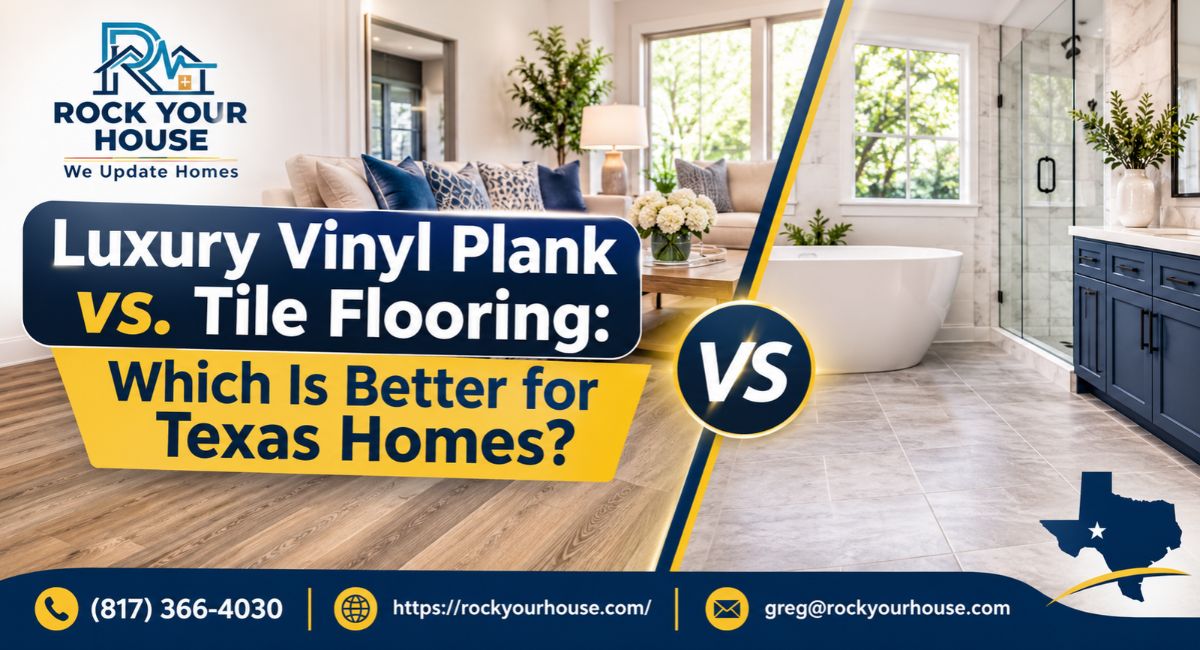
You are standing in a flooring showroom with two samples in your hands. One is a wood look vinyl plank. The other is a gray porcelain tile. Both look great. Both claim to be tough. Both claim to handle water. The salesperson says either one will work, and your budget says you can only pick one.
This is the moment where many Texas homeowners guess. Then, three summers later, a vinyl floor gaps in the sun, or a tile floor cracks over a shifting slab. Neither material is bad. Each one just fits some homes and rooms better than others.
This guide gives you a fair comparison of luxury vinyl plank vs tile. You will see how each performs with heat, water, installation, daily wear, repairs, and long-term upkeep. You will also see where each one makes the most sense, room by room. If you want a wider look at heat and humidity first, our guide on the best flooring for hot climates is a good companion read.
By the end, you will know which floor suits your kitchen, your living room, your bathrooms, and your budget. You will also know what to ask your installer before any work begins.
What Luxury Vinyl Plank and Tile Really Are
Before comparing, it helps to know what you are buying. The names sound simple, but the products vary a lot.
Luxury Vinyl Plank (LVP)
Luxury vinyl plank is a layered synthetic floor. The top is a clear wear layer that resists scratches and scuffs. Under it sits a printed film that gives the look of wood or stone. Below that is a core, and in many products a built-in underlayment pad.
The core decides how the floor behaves. Two types dominate the market:
- SPC (stone plastic composite): A dense, rigid core made with limestone powder. It resists dents and temperature swings better.
- WPC (wood plastic composite): A thicker, softer core. It feels more cushioned underfoot but dents more easily.
Most LVP is sold as click lock planks that float over the subfloor. Some products glue down instead. Wear layers range from about 6 mil to 28 mil or more. For a busy Texas home with kids or pets, a thicker wear layer gives a longer life.
Porcelain Tile
Porcelain is a dense ceramic tile fired at very high heat. Industry standards, such as ANSI A137.1 from the Tile Council of North America, define porcelain as tile that absorbs 0.5 percent water or less. The ANSI explanation of porcelain and ceramic tile covers how that test works. In plain terms, porcelain barely absorbs water. That makes it a top choice for wet areas, sunrooms, and entries.
Porcelain is also very hard. It resists scratches, stains, and fading. The trade off is that it needs a flat, solid base and careful installation.
Ceramic Tile
Ceramic tile is made from softer, more porous clay. It absorbs more water than porcelain, so the glaze does most of the protecting. It costs less and cuts more easily. It works well on walls and in dry or low traffic floor areas. For floors that see heavy use or moisture, porcelain is usually the stronger pick.
That difference matters when you compare tile to vinyl. When people say vinyl plank vs ceramic tile, they often mean any tile. In practice, porcelain is the tile that most directly competes with a quality LVP in a Texas home.
Water Resistance and Moisture: Which Floor Handles It Better?
Water is the first concern for most buyers. It is also where marketing causes the most confusion. The words waterproof, water resistant, and moisture proof do not mean the same thing.
Surface Water and Spills
A quality LVP plank is waterproof on its surface and through its core. A spilled drink, a pet accident, or a leaking dishwasher will not swell the plank. The weak spot is the seam. If water sits at a joint for a long time, it can seep under the floor. Click lock systems slow this down, but they are not sealed like a pool liner.
Porcelain tile handles surface water just as well. The tile itself will not absorb meaningful water. The weak spot is the grout. Cement based grout is porous and can stain or grow mildew when it stays damp. Sealing the grout or using epoxy grout fixes most of that.
For wet rooms like bathrooms and laundry rooms, porcelain has the edge. A tiled shower floor or tub surround is a proven system with a long track record. If you are weighing a bathroom redo, this guide to bathroom remodeling in Georgetown,TX explains how floors and waterproofing work together.
Moisture From Below
In Texas, most homes sit on concrete slabs. Slabs release water vapor, especially after heavy rain or when sprinklers soak the soil near the foundation. That vapor can hurt flooring from below.
With LVP, trapped vapor can feed mold under the planks and break down adhesive on glue down products. With tile, vapor rarely harms the tile, but it can weaken some setting materials if the slab is very wet.
The practical fix is the same for both: test the slab first. Installers use calcium chloride tests or in-slab relative humidity probes to measure vapor movement. If the numbers run high, they add a moisture barrier or sealer before flooring goes down. Many LVP makers require passing results to keep the warranty.
Hidden Leaks and Old Water Damage
A new floor can cover a problem, but it will not solve it. Before any install, check for soft spots, stained baseboards, musty odors, or past plumbing repairs. A leak under vinyl can run for months with no sign on top. It is wise to spot hidden water damage before remodeling so you do not seal in a bigger repair bill.
Verdict on Water
Both floors handle everyday water well. Porcelain is the stronger choice for bathrooms, laundry rooms, entries, and any space where flooding is possible. LVP is a good fit for kitchens and living areas, as long as the slab is tested and spills are wiped up in a reasonable time.
Heat, Sun, and Texas Weather: How Each Floor Holds Up
Texas summers test every floor. Triple digit days, strong sun, and months of air conditioning create stress that showroom samples never face.
How LVP Responds to Heat
Vinyl expands when it warms up. In most rooms, this is a small change that the expansion gap along the walls absorbs. The trouble starts when direct sun heats one part of the floor far above the rest. A south or west facing patio door can do this every afternoon. The warm strip grows, pushes on the planks around it, and may peak, gap, or lift at the seams.
SPC core planks handle this better than WPC. Thicker, denser cores move less. You can also lower the risk with window film, blinds, or curtains in sun heavy rooms. Check the warranty for surface temperature limits, since many makers set them. Keep the home at a steady temperature as well. Setting the thermostat to 90 while you travel puts extra strain on any floating floor.
How Tile Responds to Heat
Porcelain barely changes size with temperature. It does not warp in sun, and it does not fade. It also feels cooler underfoot, because tile pulls heat from your skin faster than vinyl does. On a hot July afternoon, that can be a real comfort win.
The heat related risk with tile is not the tile itself. It is the slab. Central Texas has expansive clay soil that swells when wet and shrinks when dry. A slab can shift slightly with the seasons. Tile is rigid, so a moving slab can crack grout lines or the tile. A crack isolation membrane, such as Schluter DITRA, and proper movement joints reduce that risk by letting the slab move without passing stress to the tile.
Winter and Cold Feet
Texas winters are short, but cold snaps happen. Tile feels cold in the morning. LVP feels a bit warmer. If that bothers you, electric radiant mats work well under tile. Many LVP products also allow radiant heat, but they have strict temperature caps, so check the manual first.
Sun and Fading
Both floors can handle sun, but not equally. Porcelain colors are fired into the tile and hold up for decades. LVP prints sit under a protective layer, yet strong UV can still dull some products over time. In very bright rooms, tile or a UV rated LVP line is the safer choice.
Verdict on Heat
Tile wins for rooms with intense sun and for anyone who wants a cool floor. LVP works well across most of the house if you choose an SPC core, manage sun exposure, and keep the indoor climate steady.
Installation: Subfloor, Underlayment, Time, and Labor
Installation decides how a floor performs far more than most people expect. The same product can last 25 years or fail in three, based on the prep work underneath.
Subfloor Preparation
Both floors need a clean, dry, and flat subfloor. The standards differ in how flat.
LVP is thin and flexible, so it telegraphs bumps and dips. Small flaws can show as ridges or cause locking joints to separate. Installers grind high spots and fill low areas with a leveling compound.
Tile is rigid and needs even more flatness, especially large format tile. A dip under a big tile can cause lippage, which is when one edge sits higher than its neighbor. It can also leave a hollow spot that cracks under load. Many installers aim for a very flat surface and use a leveling system for large tiles.
In either case, old flooring, adhesive residue, and loose material should be removed first. If you are tearing out existing tile, plan for more demolition time, dust, and cleanup. This is where it pays to protect your home during renovation with proper dust control and floor covering.
Underlayment and Moisture Barriers
Underlayment is a thin layer placed between the subfloor and the finished floor. Its job changes with the material.
- Under LVP: It adds sound control and small amounts of cushion. Many planks have an attached pad, so adding a second pad can void the warranty. Always check the maker’s rules.
- Under tile: Uncoupling or crack isolation membranes handle slab movement. Cement backer board is used over wood subfloors.
- Moisture barrier: On concrete slabs with high vapor readings, a sealer or barrier film is used under either floor.
Use the exact products your floor maker lists. Mixing a random pad with a rigid core plank is a common way to cause joint failure.
Time and Labor
LVP is faster. A skilled crew can often finish an average room in a day or two, and you can walk on the floor right away. Floating installs also allow furniture to go back quickly.
Tile takes longer. Setting, grouting, and curing add days. Most tile needs a day before light foot traffic and more time before heavy use or sealing. The labor is more skilled and usually costs more per square foot than vinyl.
If timing matters, such as a move in date or a holiday, LVP gives you more flexibility. If the room is a kitchen, check the kitchen remodel timeline because flooring is just one step in the sequence.
DIY or Professional?
LVP is one of the more approachable DIY floors. Click lock planks need basic tools and patience. Still, a poor install can void the warranty, and slab prep is easy to underestimate.
Tile is much harder to DIY. Mixing thinset, setting tiles level, and getting even grout lines takes skill. A mistake is costly, because tile is hard to remove once it sets. For tile, most homeowners hire a professional.
Durability, Repairs, and Long-Term Maintenance
A floor is a ten or twenty year decision. Daily wear, repair options, and upkeep matter as much as the first price.
Scratches, Dents, and Daily Wear
Porcelain is extremely hard. Pet claws, rolling chairs, and dragged furniture rarely mark it. Heavy impact is the main risk. A cast iron pan dropped from counter height can chip a tile or crack it.
LVP resists scratches through its wear layer. A thick layer handles pets and kids well. Still, vinyl can dent under heavy point loads, such as a fridge foot or a sharp furniture leg. Deep scratches and gouges cannot be buffed out like wood. Furniture pads and a good wear layer help.
Both floors can handle a busy household. Tile ages with fewer visible signs. LVP shows wear slowly, but the damage is harder to hide when it appears.
Repairs: What Happens When Something Breaks
This is where the two floors differ most.
With LVP, a damaged plank can often be swapped. In a click lock floor, the installer unlocks planks back to the damaged spot, replaces it, and relocks them. In a glue down floor, a single plank can be cut out and replaced. Either way, you need spare planks from the same lot. Buy 5 to 10 percent extra at the start and keep the boxes.
With tile, a cracked tile can be chiseled out and replaced. That is messy and skilled work. The new tile and grout must match the old ones, and dye lots change. Again, keep spare tile from your original order. A cracked tile may also hint at slab movement, so a good installer will check the cause.
So LVP is usually quicker and cheaper to repair, while tile has fewer repair needs to begin with.
Cleaning and Upkeep
Daily care is simple for both floors.
- LVP: Sweep or vacuum with a soft head. Use a pH neutral cleaner. Skip steam mops and abrasive pads.
- Tile: Sweep and mop with a mild cleaner. Seal cement grout every year or so, or use epoxy grout, which needs no sealing.
Grout is the main chore with tile. Dark or epoxy grout hides stains and cuts scrubbing time. LVP has no grout, so it stays easy to wipe down.
Lifespan
With good installation, porcelain tile can last 50 years or more. Many LVP products are warrantied for 20 to 30 years in residential use, and many last 15 to 25 years in real homes. These are general ranges, not promises. Product quality, wear layer, traffic, and install quality all change the result.
Verdict on Durability
Tile lasts longer and resists wear better. LVP is easier to repair and gentler on dropped items. If you want a floor you install once and forget, tile has the edge. If you like to update your home every decade or so, LVP fits that plan.
Comfort, Looks, Resale Value, and Cost
Comfort Underfoot
LVP is softer and quieter than tile. It has a little give, which helps if you stand at the kitchen counter for long stretches. It also dampens echo, which matters in open plan homes and upstairs rooms. Tile is hard and can tire legs and joints. Rugs and anti fatigue mats fix some of that, but not all.
On temperature, tile feels cooler in summer and colder in winter. LVP stays closer to room temperature year round.
Style and Design Options
Modern LVP does a good job of mimicking wood. Long planks, realistic grain, and embossed texture are common. Stone look LVP is also available. If you want the warm look of wood in a wet room, vinyl plank is a smart route.
Tile offers more variety. You can choose large format slabs, patterns, mosaics, and stone looks. Wood look porcelain plank is another option, and it gives the look of wood with the strength of tile. Tile also allows custom layouts, such as herringbone or accent borders.
Resale Value
Buyers in Texas still respond well to tile in bathrooms and kitchens, and to wood look floors in living spaces. High quality LVP is accepted by most buyers today, especially in mid range homes. Low quality vinyl with a visible repeating pattern can hurt first impressions. Resale value depends on the neighborhood and price range, so ask a local real estate agent what buyers expect in your area.
Cost Over Time
Installed costs vary by product, room layout, and prep work. In general, LVP costs less to buy and less to install. Tile costs more for materials and labor, and large format or patterned layouts push the price higher. Subfloor leveling, crack isolation, and demolition add to both.
It is better to look at cost per year of use. A mid range LVP at a lower price that lasts 15 to 20 years can compete with tile that costs more but lasts much longer. If you plan to sell in five years, the upfront cost matters most. If you plan to stay for decades, tile often makes more financial sense.
Flooring also belongs in your overall renovation budget, not in a separate bucket. A whole home remodel budget can help you decide where to spend more, such as tile in wet rooms, and where to save, such as LVP in bedrooms.
Luxury Vinyl Plank vs Tile: Side by Side
This table sums up the main points. It assumes a quality SPC core LVP and porcelain tile, both installed correctly. Specific products vary, so treat it as a guide.
| Factor | Luxury vinyl plank | Porcelain tile | Ceramic tile |
|---|---|---|---|
| Surface water resistance | Excellent | Excellent | Good, glaze dependent |
| Wet room suitability | Good with sealed edges | Excellent | Good for walls, fair for floors |
| Heat and sun | Good, needs sun control | Excellent | Excellent |
| Feels in summer | Neutral | Cool | Cool |
| Comfort and noise | Softer, quieter | Hard, louder | Hard, louder |
| Scratch and dent resistance | Good, can dent | Excellent | Good, can chip |
| Slab movement tolerance | Good | Needs crack isolation | Needs crack isolation |
| Install speed | Fast | Slow | Slow |
| DIY friendly | Yes, with prep | Rarely | Rarely |
| Repairs | Replace single planks | Replace single tiles, harder | Replace single tiles, harder |
| Upkeep | Low, no grout | Low, grout care | Low, grout care |
| Typical lifespan | 15 to 25 years | 50 years or more | 25 to 50 years |
| Relative cost | Low to mid | Mid to high | Low to mid |
What the Table Tells You
Tile scores higher on lifespan, heat, and wet room performance. LVP scores higher on comfort, speed, and repair ease. Cost lands in a similar range for mid grade products, but tile climbs fast with complex layouts and extra prep.
There is no single winner. The right pick depends on which row matters most in each room.
Where Each Floor Makes the Most Sense
Most homes do best with a mix. The table gives a clear starting point for each space.
| Room | Better fit | Why |
|---|---|---|
| Kitchen | Either, porcelain for heavy cooking and sun | LVP is softer for standing. Tile resists drops and heat. |
| Living room | LVP | Warmer feel, lower noise, wood look at a lower cost |
| Bedrooms | LVP | Quiet, comfortable, easy to install |
| Bathrooms | Porcelain tile | Best moisture control and a long track record in wet areas |
| Laundry room | Porcelain tile | Safe if a hose leaks or the machine overflows |
| Entry and mudroom | Porcelain tile | Handles mud, grit, and sun |
| Sunroom or glass heavy space | Porcelain tile | No fading and no heat expansion issues |
| Basement or garage conversion | Porcelain tile or LVP with a barrier | Depends on moisture test results |
| Rental or resale flip | LVP | Lower cost and faster turnaround |
Real World Scenarios
A family with two dogs and a busy kitchen. Dogs scratch, spill water, and have accidents. A thick wear layer SPC plank in the main living area handles this well and is easy to clean. In the kitchen, porcelain stands up to dropped dishes and wet paws. The two floors can meet at a threshold or flow together with a similar color.
A house with a wall of west facing windows. The afternoon sun is heavy. Porcelain tile in that zone avoids the heat and fading problem. If you want wood look warmth, choose a wood look porcelain plank, or use LVP with window film and shades.
A bathroom upgrade on a budget. Porcelain tile on the floor and a quality tub or shower surround gives the best long-term result. This is the room where cutting corners shows up fastest. A good walk in shower vs tub comparison can guide the layout before you pick tile.
An older slab with a moisture history. Do the testing first. If readings run high, use a barrier and pick the material that suits the results. Do not rely on the floor to hide the problem.
Mixing Both Floors Without a Patchwork Look
Homeowners often worry that two materials will look choppy. A few rules help:
- Change materials at natural breaks, like doorways and archways.
- Keep color tones in the same family.
- Use a flat transition strip that sits flush, not a tall threshold.
- Choose a wood look in both materials if you want a unified look.
In a large project, flooring across the whole house is better planned at once. That is part of what full house renovations in Cedar Park, TX are designed for: one plan for layout, materials, and schedule, so floor heights, transitions, and finishes line up from room to room.
For kitchens, flooring choices work best when matched to cabinets, counters, and layout. Our kitchen remodeling team plans floors alongside those pieces so nothing clashes.
FAQs : LVP Vs Tile
Is vinyl plank better than tile?
Neither is better in every case. Vinyl plank is better for comfort, quiet, fast installs, and easy repairs. Tile is better for wet rooms, high heat, sun, and long life. Many homes use both.
Which is better for Texas homes, LVP or tile?
Porcelain tile handles Texas heat, sun, and humidity with the fewest worries. LVP also works well if you pick an SPC core, control direct sun, and test the slab for moisture. A mix of both is common and sensible.
Is luxury vinyl plank really waterproof?
The planks themselves are waterproof. The seams and edges are the weak points if water sits for a long time. A moisture test and a sealed perimeter help protect the floor.
Can LVP be installed over tile?
Sometimes. The tile must be flat, firm, and clean, and deep grout lines may need to be filled or skimmed first. Otherwise, the grout pattern can show through the plank. Check the floor maker’s rules before you start.
Does tile crack more than vinyl?
Tile can crack when the slab moves or when something heavy hits it. Good prep and crack isolation lower the risk. Vinyl does not crack the same way, but it can dent, gap, or lift if the install or the sun exposure is poor.
Which floor adds more resale value?
Tile in bathrooms and wood look floors in living areas both appeal to buyers. Quality matters more than type. A well installed mid grade product usually beats a poorly installed premium one.
What is the difference between ceramic and porcelain tile?
Porcelain is denser and absorbs 0.5 percent water or less. Ceramic is softer and more porous. Porcelain is better for floors, wet areas, and heavy use. Ceramic suits walls and light duty floors.
Final Thoughts: Match the Floor to the Room
The luxury vinyl plank vs tile debate does not need a single winner. Tile leads on heat, wet rooms, and lifespan. LVP leads on comfort, speed, and repair ease. The best Texas homes often use porcelain where moisture and sun are strongest, and LVP where comfort and warmth come first.
Your next steps are straightforward. List each room with its sun, moisture, and traffic level. Ask for a slab moisture test. Pick the material that fits each room. Confirm the subfloor prep, underlayment, and crack isolation plan in writing. Buy extra material for future repairs.
If you want help choosing and installing the right floors across your home, Rock Your House can walk you through your options. As a home remodeling company in Central Texas, we plan flooring as part of the whole project so materials, timing, and budget fit together. Contact Rock Your House to start your estimate and build a floor plan that lasts.